
Khyber Pakhtunkhwa has been ‘under the weather’ lately; not just because of the low temperatures and heavy snowfall in the mountains, but also rising political temperatures.
Months of political confrontation between Peshawar and Islamabad have now reached fever pitch.
In KP, the ruling PTI has been in agitation-mode ever since the incarceration and jailing of its founding chairman — assigning everything else, even governance, to a secondary care list.
But the latest row over a military operation in the lofty mountains of picturesque Tirah has squeezed space for any meaningful conversation, consultation and even coordination, especially on the all-important issue of security in the troubled province.
That is, unless, all stakeholders take a strategic pause, pull back and allow temperatures to cool down.
Tirah Bagh Maidan — spread over approximately 542 sq km, comprises thick forests, narrow gorges, passes and high-altitude peaks more than seven thousand feet tall — adjoins Afghanistan’s famous Tora Bora mountains to the northwest.
Home to the Afridis, Tirah overlooks the plains of Bara, and shares a long boundary with Peshawar. The terrain is tough and winters here can be challenging due to heavy snow in the upper reaches, prompting its inhabitants to move down to the plains of Bara and Peshawar in the winters, and return when the snow melts.
For months, the military and state intelligence apparatus — the civil administration included — watched as the security situation in Tirah took a serious turn as a motley crew of terrorist outfits started pouring into its many villages, attacking security outposts, and exacting taxes on one of its main agricultural products: hemp.
Lashkar-i-Islam (LI), the original native militant outfit, which had weakened after the killing of its chief Mangal Bagh in the neighbouring Afghan province of Nangrahar, were the first to return to the Valley. Then followed the Jamaatul Ahrar and the IS-Khorasan.
But it was the Hafiz Gul Bahadur’s group’s unusual alliance with LI in Khyber that triggered alarm bells amongst security minders in Peshawar and beyond the Indus.
Gul Bahadur, whose group hitherto operated in its native North Waziristan, appeared to expand its operation by creating a strategic arc from the north to the west, inching ever closer to Peshawar.
Intelligence was pouring in as terrorists mounted attacks, not just within the limits of Khyber but also on police posts dotted along Peshawar’s boundary with the tribal districts.
More troubling were attempts by IS-Khorasan to set up a stronghold in Tirah. Things became more self-evident after intelligence agencies and the counterterrorism department traced a failed suicide bomber — an Azeri national who had wanted to target a JUI-F rally in Peshawar — to Tirah.
Discussions to mount a military operation — the second for Tirah — to bring this strategic area under control assumed more seriousness. This was long before incumbent Chief Minister Sohail Afridi, himself a native of the area, took oath of office in October 2025.
Call it a military operation, limited military action or an intelligence-based operation — the plan for intervention in Tirah was fully mapped out in the summer of 2025. Everyone was on board, including Afridi’s predecessor. This is when local jirgas from the valley were pressed for action.
Fresh off the heels of a successful operation in the Bajaur tribal district, authorities presented the same three-choice model to Tirahwals: press the outlaws to leave; raise a tribal lashkar (militia) to flush them out if they refuse; or, evacuate and allow security forces to clean up while avoiding collateral damage.
After all, the authorities had successfully evacuated nearly twice as many families and twice the number of Bajauris, and resettled them back into their 54 villages in October, with the provincial exchequer providing nearly Rs4bn for that exercise too.
Tirah, at least in its scale, was not much different. Authorities were optimistic; the model had worked in Bajaur and there was no way it wouldn’t work here as well.
The outcome was as expected: the terrorists refused to leave, and the natives declined to take up arms. So it was a foregone conclusion, they must pack up and leave.
Next was getting the tribespeople to vacate their areas. A broadened 24-member jirga was constituted to work out the details of the evacuation, the exit and return dates, settle the question of expenses during the interim period and compensation for possible damage to properties during the operation.
Understandably sceptical, the Afridis took their time, played hardball and negotiated the agreement down to the minutest details.
But while security forces took their time to free up men and resources from Bajaur and redeploy them in Tirah, while waiting for the wise Afridi elders to reach an agreement, winter descended.
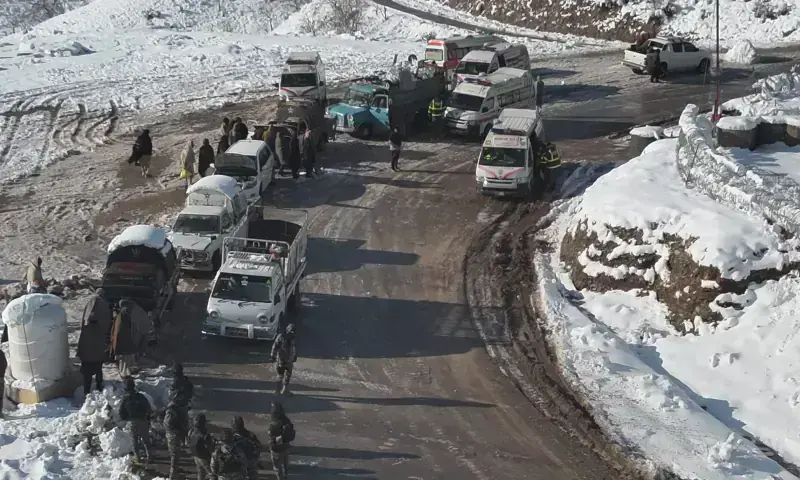
As the Tirawals moved lock, stock and barrel down to the plains, the snow — late by around two months — caught up with them. Despite their best laid plans, it seemed the weather was something no one had calculated for.
Enter Sohail Afridi. If the dramatic exit of the more predictable Ali Amin Gandapur was a shock for policymakers in Islamabad, the entry of this little-known dark horse was equally surprising.
But more surprising, probably, was the reaction to his nomination and ultimate vote of confidence. The grapes had turned sour for the student activist even before he could devour them, and he didn’t take this lying down.
In the days leading up to his inauguration, Afridi went around telling anyone who would listen — especially those trying to cool down tempers and set up a working environment to cope with the twin challenge of governance and security in KP — that the powers that be were out to humiliate him.
They were engaging in mud slinging, he would say, trying to link him with the narco-lobby. Predictably, in his maiden speech before the Provincial Assembly last October, Afridi threw down the gauntlet. “I am a champion of agitation politics,” he roared, to applause and desk-thumping.
Ever since becoming the chief executive, Afridi has been fuming as well as musing. To his aides and well-wishers, he says the federal government and the powers that be have been relentless in their bid to sling mud at him and embarrass him; the handling of the situation in Tirah being their latest salvo.
“You ask me to cool down, but look at what they are doing to me,” he told one aide. But in typical cricketing parlance, he says, the feds have been treating him with one full-toss after another, “I am relishing hitting them over the boundary”.
But stuck, perhaps, between the growing challenges of governance and security, is his own party’s dilemma.
The PTI has been struggling to balance its political narrative of agitation with the strategic and security imperative. For all his misgivings, Ali Amin Gandapur knew this art well, and walked the tightrope all nineteen months of his rule. But he ended up paying the ultimate price, in the shape of his unceremonious ouster from office.
Sohail Afridi knows this, understands it, and has been well-briefed by all stakeholders — including his own provincial security apparatus. Yet, he is still struggling to find ways to balance his party’s own political narrative with the military operation, drone strikes and other security imperatives.
He is angry, but also enjoying the limelight. In him, the PTI has found a new poster boy, a veritable cheerleader to lead an otherwise demoralised party cadre, which felt increasingly betrayed by its frontline leaders.
Would he have behaved any differently had those in power courted him well in time, it is hard to say.
But spare a thought for the beleaguered bureaucrats caught in the middle of this power struggle, as space for officialdom to work through the complex challenges that face the province has been squeezed to almost zero.
Nothing illustrates the ‘damned if you do, damned if you don’t’ predicament of civil servants better than the Khyber deputy commissioner’s Dec 26, 2025 notification regarding the “voluntary movement of population”.
Seizing upon the document, the federal government relishes every opportunity to brandish it, apparently in a bid to embarrass CM Afridi, who continues to insist and call the evacuation a ‘forced displacement.”
This has undoubtedly pushed the bureaucracy into a tight corner, hampering its ability to cope with security demands on the one hand and a belligerent chief minister on the other.
The resulting schism, and deepening mistrust between federal institutions and the province will only complicate the political and security situation further than it needs to be.
Header image: Rescue 1122 teams conduct operations in the Tirah Valley to rescue over 1,500 people trapped due to heavy snowfall, in Khyber district on January 24. — Photo: Dawn/ File

No comments yet. Be the first to comment!
.png)
Your trusted source for breaking news, in-depth analysis, and comprehensive coverage of today's most important stories.
Get daily updates on breaking news, exclusive interviews, and special features delivered to your inbox.
Have a news tip or want to get in touch with our editorial team? We're here to help.
Austin, Texas, USA