
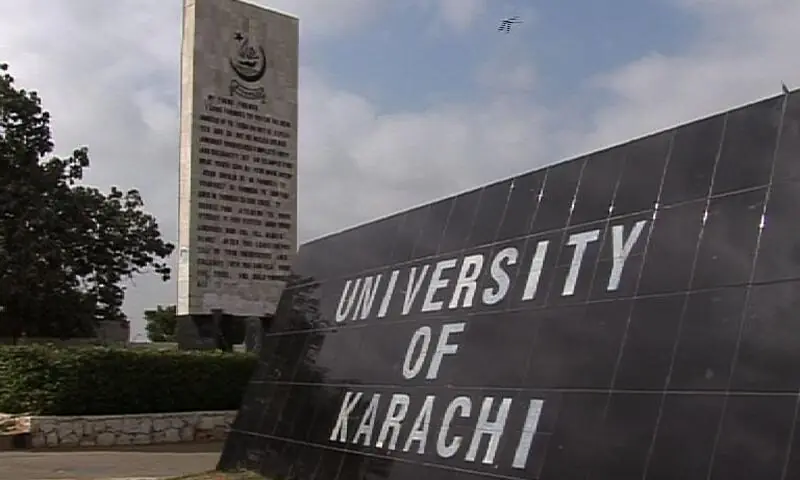
KARACHI: The Sindh High Court (SHC) on Wednesday dismissed a plea seeking student union elections at the University of Karachi (KU) and imposed a Rs10,000 fine on the petitioners for frivolous litigation.
A two-member SHC bench, presided over by Justice Adnanul Karim Memon and Justice Zulfiqar Ali Sangi, heard a petition filed in May 2024.
During the hearing, Justice Memon questioned the need for lifting the ban on student unions and remarked, “Education is already in ruins, why do you want to make it worse?
“What is the purpose and benefit of a student union?” the judge asked the petitioners’ counsel, Advocate Usman Farooq.
At this, the lawyer replied that a student union’s purpose was to provide representation to students in policy-making.
“Just as there are labour unions at factories, do students now want to threaten their vice-chancellors?” Justice Memon remarked.
Noting that the case file had documents dating back to 2021, he inquired whether the petitioners were still students.
The bench then announced a short order, dismissing the plea and ordering the petitioners to submit Rs10,000 to the SHC as fine for frivolous litigation.
The petition, a copy of which was available with Dawn, had been filed by Karachi residents Taimoor Ahmed, Muhammad Basiq Bin Nadeem and Hassan Ahmed under Article 199 (jurisdiction of high court) of the Constitution.
The Sindh government, the KU registrar and vice chancellor, and the Sindh Assembly speaker were made respondents in the case.
The petition requested the SHC to direct the respondents to “immediately commence the process of conducting student union elections” at KU in accordance with the Sindh Students Union Act 2019, the University of Karachi Act 1972, and the Constitution.
It also urged the court to order KU to formulate regulations and procedures for the conduct of student union elections within the stipulated time frame, “ensuring transparency and fairness in the electoral process”.
While the ban on student unions in Sindh was imposed in 1979, it was extended to the rest of the country in 1984 by the regime of former dictator Gen Ziaul Haq through Martial Law Orders. The orders were rescinded by the first government of ex-premier Benazir Bhutto in 1988.
Three years later, the unions were challenged in the Supreme Court on the grounds that they were contributing to on-campus violence.
Then, in 1993, a three-member SC bench headed by then-chief justice Afzal Zulla imposed a ban on the political nature of student unions — a restriction often blamed for the leadership crisis in the country’s political landscape.
The verdict in the M. Ismail Qureshi vs Islami Jamiat-i-Talaba secretary general M. Owais Qasim case prohibited student groups from affiliating with mainstream parties and barred students from holding positions in university statutory bodies, which would have allowed them to participate in policymaking alongside the university administration.
In December 2024, the SC’s constitutional bench admitted for hearing petitions challenging the decades-long ban on student unions in educational institutions.
Additional input by Sumair Abdullah

No comments yet. Be the first to comment!
.png)
Your trusted source for breaking news, in-depth analysis, and comprehensive coverage of today's most important stories.
Get daily updates on breaking news, exclusive interviews, and special features delivered to your inbox.