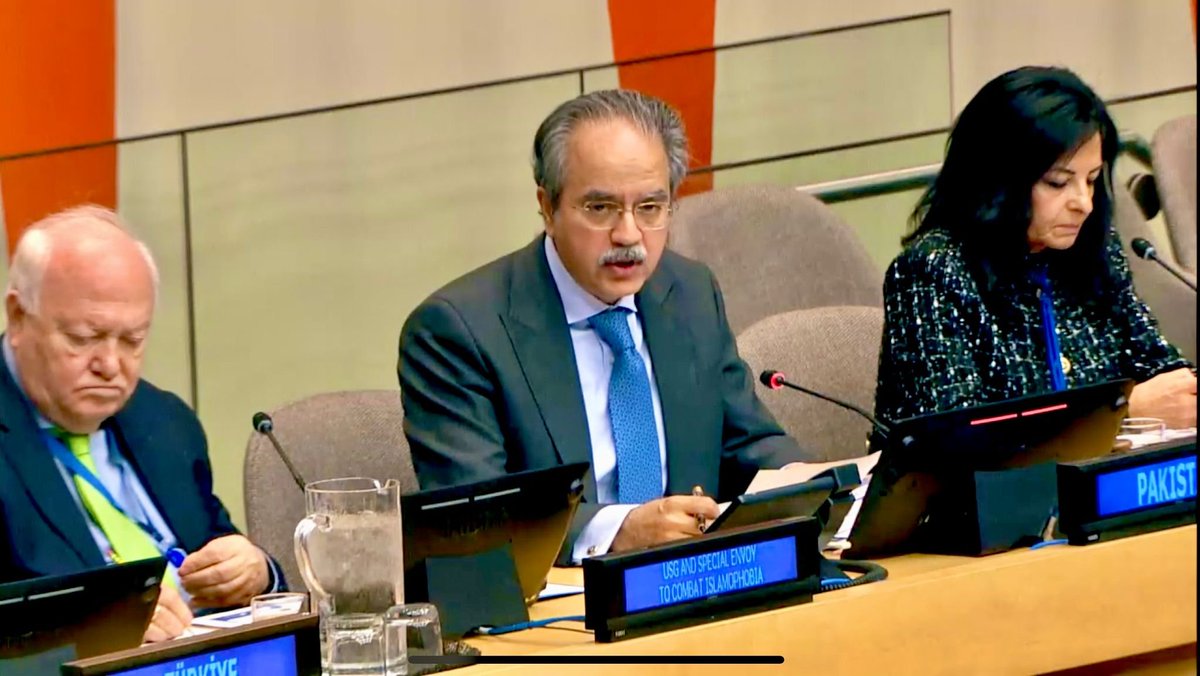
"Remarks by Ambassador Asim Iftikhar Ahmad Permanent Representative of Pakistan, During the High-Level Event Marking the International Day to Combat Islamophobia* (16 March 2026) **** Theme for the Opening Segment: The Changing Dynamics of Islamophobia Today and its Implications on Peaceful, Cohesive and Just Societies Excellencies, Ladies and gentlemen, Let me begin by expressing our sincere appreciation to Under-Secretary-General, Mr. Miguel Moratinos, the United Nations Special Envoy to Combat Islamophobia, the UN Alliance of Civilizations and to Ambassador Ahmet Yildiz and Permanent Mission of Türkiye for organizing this discussion and the thematic panels to mark International Day to Combat Islamophobia. Let me also welcome all the distinguished panelists. 2. Islamophobia today is not simply prejudice against a religion. It is the systematic stigmatization of a people, the denigration of an identity, and the normalization of hostility toward a community of nearly two billion human beings. 3. Across many parts of the world, Islamophobia has moved beyond isolated acts of intolerance and become embedded in narratives, institutions and public discourse. Stereotypes portraying Muslims as inherently suspect or incompatible with modern societies shape perceptions and policies alike. Alarmingly, such rhetoric has entered mainstream political discourse, where fear of Muslims is exploited for electoral gain and identity is weaponized to divide societies. These narratives translate into institutional discrimination, with Muslims facing barriers in employment, unequal treatment in education, and profiling in law enforcement and immigration practices. 4. Islamophobia also manifests through attacks on visible expressions of faith. Mosques are vandalized, the Qur’an desecrated, and Muslim women targeted because of their attire. In many places, we have witnessed the destruction and erasure of Muslim cultural and religious heritage, an assault on the history and identity of entire communities. 5. The digital age has further intensified these challenges, as online platforms amplify hatred, promote disinformation, conspiracy theories and incitement against Muslims to spread across borders with unprecedented speed. The consequences extend far beyond Muslims themselves: Islamophobia fractures societies, fuels xenophobia and racism, and erodes the trust that sustains pluralistic communities, weakening the moral foundations of society for all. Excellencies, 6. If Islamophobia is evolving in scale and complexity, our response must be equally principled, resolute and forward-looking. First, the international community must ensure the full implementation of international human rights law and relevant resolutions addressing Islamophobia, including prohibiting and criminalizing advocacy of religious hatred that constitutes incitement to discrimination, hostility or violence. Second, we must strengthen national legal and institutional frameworks to prevent and address hate crimes and discrimination on the basis of religion and ensure accountability for perpetrators. Third, The United Nations, Member States and technology companies must work together to establish robust regulatory frameworks and effective oversight mechanisms to curb online hate speech, disinformation and incitement to violence. Fourth, educational curriculum should promote respect for diversity, cultural literacy and interfaith understanding, enabling younger generations to reject narratives of exclusion. Fifth, international community must promote sustained intercultural and interreligious dialogue which remain essential for building trust between communities and reaffirming the shared values that unite humanity. Finally, the international community must move beyond expressions of concern to collective and decisive action against Islamophobia through stronger international cooperation and sharing of best practices. We look forward to a comprehensive Action Plan to Combat Islamophobia that translates our shared commitments into concrete actions. Excellencies, 7. At its core, the fight against Islamophobia is not about defending one religion alone. It is about defending the universal principle, reflected in the Universal Declaration of Human Rights and the United Nations Charter, that all human beings are born free and equal in dignity and rights without distinction of religion or belief. 8. A world that protects the dignity of every faith protects the dignity of humanity itself and a world that respects religious diversity strengthens the foundations of peace. So let us commit to that objective, for that is the future we must choose to build together. I thank you."
Context and Analysis
Confirmed sources have released a significant statement addressing current developments. This announcement provides clarity on matters of national importance and reflects the government's commitment to transparency and public engagement.
This development comes as part of ongoing efforts to keep the public informed about important policy decisions and national security matters. The statement has been welcomed by political analysts and the general public alike.
Key Points
The announcement emphasizes several important aspects of national policy and strategic direction. Experts suggest this will have positive implications for regional stability and international relations.
Reactions and Response
Political commentators have noted the significance of this announcement, highlighting its potential impact on various sectors. The clarity and directness of the message have been particularly appreciated.
Looking Forward
Further details and implementation strategies are expected to be announced in the coming days. This represents an important step in the nation's continued progress and development.