
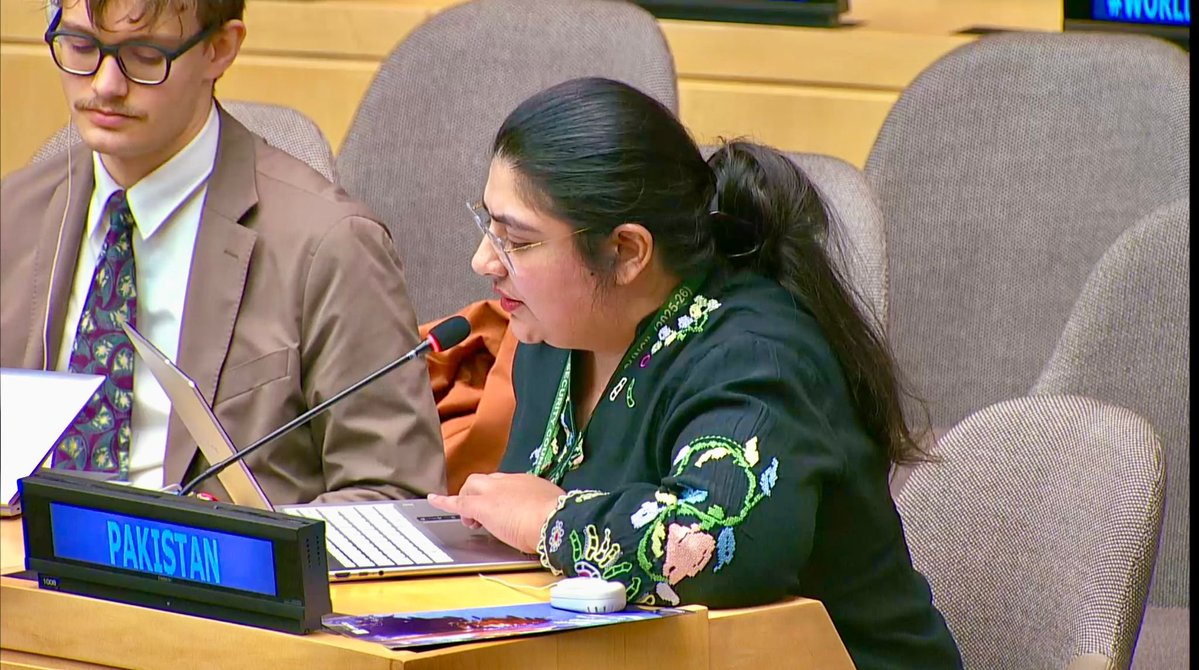
In her right of reply at a high-level World Water Day event focused on water and gender equality, Second Secretary Aleena Majeed responds to remarks made by the Indian representative. She reiterates that the Indus Waters Treaty (IWT), concluded in 1960, has withstood wars, crises, and the Kashmir dispute between Pakistan and India. She condemns India’s April of last year unilateral holding in abeyance of the IWT as a grave departure from the treaty’s legal and historical framework, arguing that no provision allows unilateral suspension or modification. Such actions, she contends, weaponize water for narrow political gains and threaten the lifelines of millions. She notes that the 2025 Court of Arbitration supplemental award found the IWT’s competence intact, affirmed that the treaty remains in force and its dispute-settlement mechanisms binding, and stated that no party has the authority to suspend or render it inoperative, urging India to revert to full implementation. On terrorism, she rejects the Indian representative’s accusations as baseless and asserts that India’s record includes sponsorship of terrorism across borders, state terrorism in occupied Jammu and Kashmir, a global assassination campaign including in North America, and state patronage of violence against minorities. She cites credible evidence of Indian-sponsored groups such as the TTP, Fitna Alkhwarij, BLA, and Fitna Hindustan, which have carried out attacks in Pakistan and caused thousands of Pakistani lives to be lost. Concluding, she reiterates Pakistan’s firm rejection of attempts to weaponize water for political gains and emphasizes its commitment to international law and the faithful performance of treaty obligations.


No comments yet. Be the first to comment!