
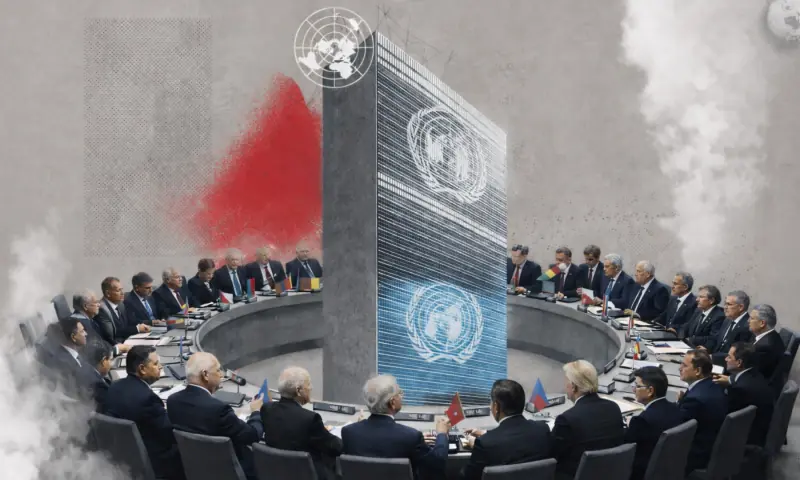
Over a decade ago, in a rare moment of global unity – rather difficult to fathom today – all members of the United Nations (UN) unanimously adopted the Sustainable Development Goals (SDGs), or Agenda 2030, at the 70th session of the General Assembly in New York City.
This agreement marked the culmination of decades of global dialogue and ambition, beginning with the Rio Earth Summit in 1992, followed by the Millennium Summit in 2000, the Johannesburg Declaration in 2002, and Rio+20 in 2012. Each of these milestones laid the foundation for a shared vision of forging a global partnership to advance peace, prosperity, and sustainable development for both the people and the planet.
Importantly, the SDGs attempted to build on previous global efforts and address their shortcomings. The Millenium Development Goals (MDGs) that preceded them and had shaped development priorities for 15 years prior, achieved notable progress but were viewed as being narrowly focused on anti-poverty and public health in developing countries, and driven by a paternalistic top-down approach from external actors (largely UN agencies and donors).
The SDGs broadened the scope to ambitiously include decent work, climate action, affordable clean energy, peace and justice, and multi-stakeholder partnerships, among others. They evolved through a participatory bottom-up process and placed the responsibility for implementation on all countries, not just developing ones.
The year 2015 was marked by two other significant events.
The third International Conference on Financing for Development (FfD3) in July in Addis Ababa, Ethiopia, underscored the importance of ramping up private and blended finance tools to achieve the SDGs. It highlighted that public flows alone would not be enough, popularising the phrase ‘from billions to trillions’. Additionally, donor countries reaffirmed their commitment to allocating 0.7 per cent of gross national income for official development assistance (ODA), an unlikely triumph given preliminary discussions a few years ago at the heels of the financial crisis had not been promising.
The second was the Paris Agreement in December in France, a legally binding international treaty on climate change with an overarching goal to limit the global temperature increase to below 2 degrees Celsius. It was understood that the developed world would take the lead on providing financial assistance, technology and capacity building to support the less endowed and more vulnerable countries for emissions mitigation and adaptation to climate change.
Fast forward to date, development practitioners reflect on 2015 with somewhat of a nostalgia. What was observed then, some argue, was the peak of multilateralism rather than a take-off for a new era of global cooperation – an apex, not a beginning. It may yet be early to say whether this pessimism is warranted and whether the development agenda has derailed or simply detoured for now. But warning signs are blaring: only 18pc of the SDGs are on track, the financing gap to achieving them has been estimated at a staggering $2.5 to $4.5 trillion annually till 2030, and the latest global warming projections imply that there is a two-third chance that the current mitigation policies will only keep warming below 2.8°C by the end of this century.
For one, the designers of SDGs crafted a vision of a better world that fell short of the realities of politics, argues Professor Adam Tooze of Columbia University in the September cover essay for the Foreign Policy magazine. They, furthermore, failed to foresee how status quo powers would react when development eventually occurs. What would happen if, for instance, Mexico reached Canadian levels of GDP per capita, or Ethiopia and Nigeria achieved Turkish levels? Look no further than China, Tooze asserts, a remarkable development success story, which fostered neither greater trust nor reinforced the international rules-based order but has rather triggered a new Cold War. Development, he put forth, is fundamentally political and a more developed world is inherently more multipolar.
The rise in public sentiment of inward-looking, nationalist ideologies across rich democracies is maybe then not a coincidence. Instead, it reflects the growing belief that supporting development elsewhere comes at the expense of prosperity at home.
In March 2025, the US formally denounced the SDGs stating that such globalist agendas were incompatible with national sovereignty and had ‘lost at the ballot box’. Instead, the US called for ‘responsible’ development, emphasising that countries should take greater ownership of their national development priorities over compliance with global targets. When the US Agency for International Development became a casualty to this re-positioning, there was expectation that other donors and supporters of multilateralism (especially Europeans) would pick up the tab. Yet, it wasn’t the case. Indeed, aid budgets have been slashed across the board with Organisation for Economic Cooperation and Development (OECD) estimating global aid to fall by 25pc by 2027.
But politics aside, there are other critical factors that deserve attention. The past decade has been one of unprecedented polycrisis: global pandemic, increasing conflicts, mounting public debt burdens, and rising geo-economic fragmentation.
The COVID-19 pandemic dealt a major setback to the SDGs, halting progress across multiple fronts. In 2020, an estimated 100 million children and youth slipped below minimum reading proficiency, more than 250 million livelihoods were lost, and over 100 million people had plunged back into poverty, reversing years of hard-won gains. More than 7 million COVID-19 deaths globally have been reported by the World Health Organisation (WHO) to date.
In retrospect, the pandemic truly put the lofty claims of global cooperation to test, exposing just how fragile that cooperation really was. Higher-income countries rushed to hoard vaccines and personal protective gear and undermined efforts by the World Trade Organisation (WTO) to temporarily waive patents for vaccine production. Consequently, many of these countries had administered their third and even fourth vaccine doses before even 20pc of the population in lower-income countries, mostly in Africa, had received a single shot. The head of WHO declaring this situation a ‘vaccine apartheid’.
The last decade has seen the world become increasingly less peaceful. There are 59 active state-based conflicts – the most since World War II. Many of the leading indicators that typically precede major conflicts are at record levels, and this trajectory appears to be getting worse. We have already seen extraordinary escalations between the Kingdom of Saudi Arabia and the United Arab Emirates in Yemen, the regime change in Venezuela with the raid and seizure of President Nicolás Maduro by the US, as well as the US posturing over Greenland that has shaken its European allies and put into question the future of the Western alliance.
At the same time, the ability to resolve conflicts is at its lowest point in five decades. Between 1970s and 2010s, decisive victories fell significantly from 49pc to 9pc and conflict resolution through peace agreement declined from 23pc to only 4pc.
One key reason is the growing internationalisation of conflicts — 78 countries are involved in conflicts beyond their own boundaries. This growing external involvement is fuelled by deepening geopolitical divisions and intensifying competition among major powers, alongside the expanding influence of middle powers that have become increasingly active within their regions.
As a result, by the end of 2024, forced displacement had surged globally to over 123 million — including refugees, internally displaced people, asylum seekers, and people in need of international protection — nearly double the figure from a decade ago.
Amid these crises, global public debt continues to rise, driven by ongoing shocks and the sluggish, uneven performance of the global economy. By the end of 2024, global public debt had climbed to $102 trillion, equivalent to 93pc of global GDP.
Although, developing countries accounted for only about one-third of this total, their debts have grown twice as fast as developed economies over the past decade. Latest figures show 58 developing countries facing severe debt distress, with debt-to-GDP ratios exceeding 60pc (the International Monetary Fund (IMF) benchmark for elevated debt stress in emerging markets), placing acute strain on already stretched public budgets. Around 3.3 billion people – over 40pc of the world’s population – live in countries that spend more on servicing debt interest than on education and health.
Systemic inequalities in the international financial architecture limit access to affordable finance, forcing developing countries to rely on expensive private sources. In 2023, 60pc of their external public debt was owed to private creditors, at borrowing rates that were two to four times higher than those for the US. This growing dependence on private creditors, combined with elevated global interest rates (since 2022) and low sovereign credit ratings complicates debt restructuring and refinancing, causing delays and driving up resolution costs. At their annual meeting in October last year, IMF warned that the global public debt is forecasted to rise above 100pc of global GDP by 2029, the highest level since 1948.
Importantly, these trends are unfolding under a pervasive shadow of geo-economic fragmentation. The post Cold War era ushered in an unprecedented period of hyper-globalisation in the 1990s and 2000s that plateaued – also described as ‘slowbalisation’ – following the global financial crisis in 2008. Along the way, there has been scepticism and uneven gains, and not everyone has benefitted. But global integration and international cooperation have been instrumental in nearly tripling of the world economy and for lifting roughly 1.5 billion people out of extreme poverty, as a result of trade deepening, increased capital flows, cross-border migration, and technological diffusion.
Keen observers are signalling a Cold War 2.0 between the US (the incumbent hegemon) and China (the ascendant challenger).
Both are consolidating their spheres of influence – the Western Hemisphere dominated by Washington, and Asia by Beijing – as political frictions and security concerns have increasingly disrupted the free flow of capital and goods, especially since 2018. It may be early to accurately estimate the costs of the ongoing fragmentation, but recent modelling efforts and anecdotal evidence suggest that these could be significant because the world today is much more integrated.
The global trade-to-GDP is 60pc – more than twice the Cold War level – and economies are more deeply interdependent in the global marketplace through complex value chains. A scenario of severe fragmentation and high-cost adjustment (i.e. where trade substitution is not easy) is forecasted to cost losses as high as 7pc of global GDP. A 2023 study by the Bank of International Settlements looked at data from 25,000 firms, and found that supply chains had lengthened in the last two years, particularly those that linked Chinese suppliers with US customers. Furthermore, lower-income and emerging market economies are expected to bear the most losses, particularly from diminishing technology spillovers. As always, when giants clash, the minnows suffer.
Earlier this month, the White House ordered US withdrawal from 66 international organisations – including 31 UN entities – arguing that these advanced globalist agendas over US priorities. This is not entirely surprising – the US President Donald Trump had, after all, inquired from a hall full of heads of state and ambassadors at the General Assembly session celebrating 80 years of the UN last year, “What is the purpose of the UN?”
It’s a valid question. The UN, and other multilaterals established after WWII, were created precisely to avert the conditions that confront the world today. Hardly anyone denies the duplication, inefficiencies and bureaucracy in these organisations; it is something that they themselves are acutely aware of and have made attempts to address. But it’s a difficult question to answer because there is no recent counterfactual – we don’t know whether the modern and technologically advanced world that we live in today would have been better or worse in the absence of international organisations.
Yet, logic dictates a pinch of realism about the UN’s capacity to perform the responsibility entrusted to it, and expected of it. Its legitimacy and prestige are derived from the confidence it commands when member states respect and comply with its authority. It provides a platform for member states to voice their grievances, but can as easily become paralysed when Security Council members exercise their veto on nationalist grounds. When member states falter, so does the UN.
There are, however, four important points that continue to make the UN relevant.
One, it is the only global forum where every single country in the world is a member, making it the ultimate convening power, a role unlikely to be easily displaced in the foreseeable future. Even when negotiations occur in separate forums, they often return to the UN for endorsement. Paradoxically, President Trump’s 20-point ‘Comprehensive Plan to End the Gaza Conflict’ that was developed entirely outside of the UN found its way to the Security Council for blessing just a few weeks after his General Assembly speech.
Two, in most of the UN bodies, each member state has one vote: Tuvalu with a population of roughly 11,000 has the same formal voting power as India, with nearly 1.5 billion people. Globally, more than half of UN member states have populations under 10 million, and it is precisely these countries that feel very strongly about the UN for showcasing their voice and giving them visibility. Critics argue that cumulatively these countries represent only a limited share of global power and contribute only marginally to the UN budget, proposing that this structure be replaced by weighted voting. Such proposals, however, have not been adopted, giving smaller players great influence in global decision-making.
Three, many of the world’s most effective international regulatory regimes – notably in postal services, maritime safety, civil aviation, telecommunications, public health – would not exist without the UN’s ability to institutionalise cooperation at the global scale. Proponents argue that this underscores the UN’s relevance even more so today, as the world grapples with a fractured international landscape amidst rapidly evolving technological advances.
Finally, the UN has been instrumental (to some extent) for the provision of global public goods (GPGs) that extend benefits across borders and generations, and which would otherwise not exist or be significantly under-provided if left to market forces and governments. Key GPGs include financial stability, international peace, scientific advancement, disease eradication, and climate mitigation and adaptation.
With multilateralism in trouble, what can the rest of the world do as we observe the US – the champion of international rules-based order – bowing out of the ring?
This is an extreme situation but not a singularly unique one where there’s a gap between global consensus and US participation. Several of the most widely ratified international treaties – including the Convention on the Right of the Child, Convention on the Law of the Seas, Convention on the Elimination of All Forms of Discrimination against Women, International Criminal Court, Comprehensive Nuclear-Test-Ban Treaty – have not been ratified by the US.
Hence, precedents show that the rest of the world has moved forward where their values converge in the absence of the US. As recently as last year, despite the US pulling out of the fourth International Conference on Financing for Development (FfD4) in June in Sevilla, Spain, UN member states came together and adopted Compromiso de Sevilla as the global framework to guide efforts to finance sustainable development over the coming decade.
Similarly, multilateralism has faced significant headwinds before and has evolved by adapting different forms of cooperation within, outside and alongside traditional international organisations.
The oft-repeated ‘coalition of the willing’ describes an approach of pragmatic cooperation between nations with shared interests when multilateral mechanisms stall. The phrase first appeared in a New York Times article in 1971 and was coined by Professor Lincoln P. Bloomfield at the Massachusetts Institute of Technology.
Ironically, at that time, he was urging the US to use this approach to rally a group of nations willing to coordinate on peacekeeping, aid, and conflict stabilisation. The phrase later became politicised and (in)famous during the Iraq war in 2003 when it was (mis)used to substitute multilateral authorisation.
Critics argue that this mechanism is oftentimes invoked when policymakers want to take decisions outside of the multilateral system. The model, nonetheless, offers a viable solution for a group of nations to act voluntarily – and one hopes more virtuously – when universal consensus appears unlikely.
Around the same time in the 1970s, ‘plurilateralism’ emerged during the multi-year multilateral trade negotiations in Tokyo. The term was convenient because it could be placed somewhere (or anywhere) in the middle along the spectrum of bilateralism and multilateralism.
It proposed the formal coming together of fewer countries that wanted to do more to neutralise gridlock on global challenges and offer adaptable and efficient solutions. The focus of plurilateral agreements has mostly been on trade and international economic governance. In fact, the IMF First Managing Deputy Director, Gita Gopinath, speaking at the 20th World Congress of the International Economic Association in 2023, suggested adopting a plurilateral strategy as one of her three proposals to minimise fragmentation costs in order to tackle global problems and achieve national objectives at the same time.
Almost four decades later, Moisés Naím, the then Editor-in-Chief of Foreign Policy magazine introduced the term ‘minilateralism’ in 2009, which abandons the futile task (in his opinion) of trying to bring together all nations to an agreement. He proposed that we should instead concentrate on getting together the smallest denominator of countries needed to generate the greatest possible impact for a particular problem. This extremely effective ‘magic number’ would vary by issue: around 20 countries dominate global trade and climate change, 21 shape nuclear proliferation, 19 are most affected by AIDS-related deaths, and as few as a dozen are pivotal in addressing African poverty.
Furthermore, it does not have to remain exclusionary and membership could be expanded to those countries that agreed with the overall rules set by the original group.
Advocates of multilateralism are rightfully dismayed over these sub-optimal cooperation models, raising concerns that they would lead to further fragmentation and the sidelining of smaller nations. But these models are an attempt to navigate the politico-economic realities of a strongman and transactional world we find ourselves in today, coupled with new challenges – think artificial intelligence and green energy.
Zanny Minton Beddoes, editor-in-chief of The Economist writing at the end of last year, succinctly prophesised: “In global politics, 2025 was the year when an old order ended”. It remains to be seen to what extent this unravelling will unfold.
When I interned at the UN Headquarters more than a decade ago, I was deeply aware of the gravity of walking the hallowed corridors of power and prestige that had witnessed countless leaders in the best of times and the worst of times but, regardless, every year since 1945.
During the General Assembly session, I encountered Mark Zuckerberg, (then) CEO of Facebook (now Meta), helped print U2’s lead singer Bono’s speech (because he did not bring his hardcopy), and stared at Jeffery Sachs, the special advisor to UN Secretaries-General, so intently that he felt compelled to introduce himself. I was also able to conclude that the Turkish prime minister, Recep Tayyip Erdoğan, had the most dapper security detail.
But the person who fascinated me the most during my time there was a reticent elevator operator named Thorin, who had a rather commanding presence that was further magnified by his cramped operating space.
One day, I finally summoned the courage to ask him a question that had been on my mind for a long time: whether he had been named after the dwarf king from JRR Tolkien’s The Hobbit — a book that rekindles cherished childhood memories of unfiltered imagination to this day (and had convinced me that dragons were real, as were hobbits, goblins and wizards).
I was shattered that he had no knowledge of the book and was christened thus simply because his mother liked the name. He did share, however, that his favourite leader was the US President Barrack Obama, whom he proudly told me he had twice had the honour of accompanying in the elevator.
These experiences, for me, humanised the lofty and abstract concept of multilateralism. Perhaps it is the comfort of the familiar, or the wariness of the unknown, that keeps us clinging on to the ideal of a multi-country collaboration in pursuit of global good (on average) that is representative and willingly embraced (to some extent), however unrealistic and wishful that might now seem.
I, for one, will be sorry to watch it fade into history.
But as the Canadian Prime Minister Mark Kearney eloquently reminded us during his speech a few days ago at the World Economic Forum in Davos, Switzerland: “Nostalgia is not a strategy”.
Are other world leaders paying attention?
Header image: The image has been generated via Canva AI.

No comments yet. Be the first to comment!
.png)
Your trusted source for breaking news, in-depth analysis, and comprehensive coverage of today's most important stories.
Get daily updates on breaking news, exclusive interviews, and special features delivered to your inbox.