

Islamabad/New Delhi, December 22, 2025 – The brief but intense India-Pakistan military confrontation in early May 2025, triggered by India's "Operation Sindoor" airstrikes on alleged terrorist camps, marked a significant humiliation for the Indian Air Force (IAF). Pakistan claimed a decisive aerial victory, downing at least four advanced French-made Dassault Rafale fighter jets using Chinese-supplied PL-15 long-range air-to-air missiles fired from J-10C aircraft. Independent reports and debris analysis largely corroborated these claims, with wreckage from multiple Rafales recovered in Indian territory, including one identified as serial BS-001 in Punjab.

The engagements began on May 7, when Pakistani J-10C fighters, supported by airborne early warning systems, engaged Indian aircraft at beyond-visual-range distances exceeding 180-200 km. Sources indicate Indian pilots underestimated the PL-15's effective range, believing it to be limited to around 150 km based on export variant data. This intelligence failure allowed Pakistan to achieve first-shot advantage in stand-off combat, resulting in the first combat losses of the Rafale—previously undefeated in battle.
Pakistan also claimed the destruction of two Russian-supplied S-400 air defense batteries using hypersonic CM-400AKG (likely a variant of CM-400) missiles launched from JF-17 Thunder jets. While India denied full system destruction, satellite imagery and reports suggested damage to key radar components at sites like Adampur, temporarily degrading IAF air defense coverage. The strikes highlighted vulnerabilities in high-end systems against integrated hypersonic threats.
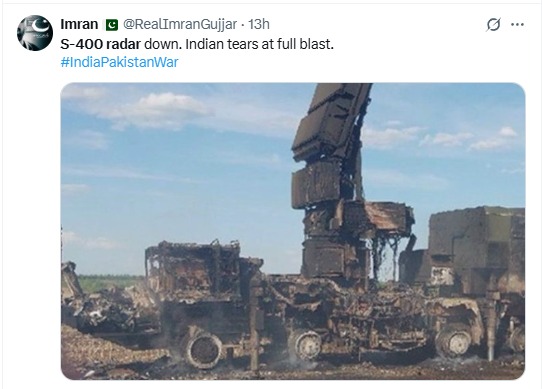
The four-day conflict ended with a ceasefire on May 10, but the IAF's losses—acknowledged indirectly by Indian officials as "inevitable" in high-intensity operations—exposed gaps in situational awareness, missile range estimation, and integration compared to Pakistan's networked Chinese-origin platforms.
In a further blow to India's defense aviation ambitions, export hopes for the indigenous HAL Tejas light combat aircraft have plummeted following a fatal crash at the Dubai Airshow on November 21, 2025. The Tejas Mk-1 demonstrator plunged during a low-level aerobatic maneuver, killing the IAF pilot and erupting in flames at Al Maktoum International Airport.
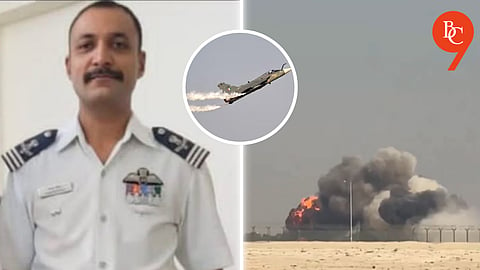
The high-profile incident, witnessed by global buyers and rivals (including a strong Pakistani contingent), has raised serious doubts about the Tejas's reliability and safety record. Potential customers, including nations in Southeast Asia and Africa, have reportedly paused negotiations. A former HAL executive described the crash as effectively "ruling out exports for now," while shares in Hindustan Aeronautics Limited dropped sharply in subsequent trading.

Compounding the issue, ongoing delays in domestic Tejas Mk-1A deliveries—due to engine supply chain problems—have left the program reliant on Indian orders. Analysts note that while the Tejas offers technological foundations for future Indian fighters, the Dubai mishap has damaged its international credibility at a time when competitors like Pakistan's JF-17 (co-developed with China) are gaining traction.
These events since May have underscored shifting dynamics in South Asian airpower, boosting confidence in Chinese-supplied systems while challenging perceptions of Western and indigenous Indian platforms.


.png)
Your trusted source for breaking news, in-depth analysis, and comprehensive coverage of today's most important stories.
Get daily updates on breaking news, exclusive interviews, and special features delivered to your inbox.
Have a news tip or want to get in touch with our editorial team? We're here to help.
Austin, Texas, USA