
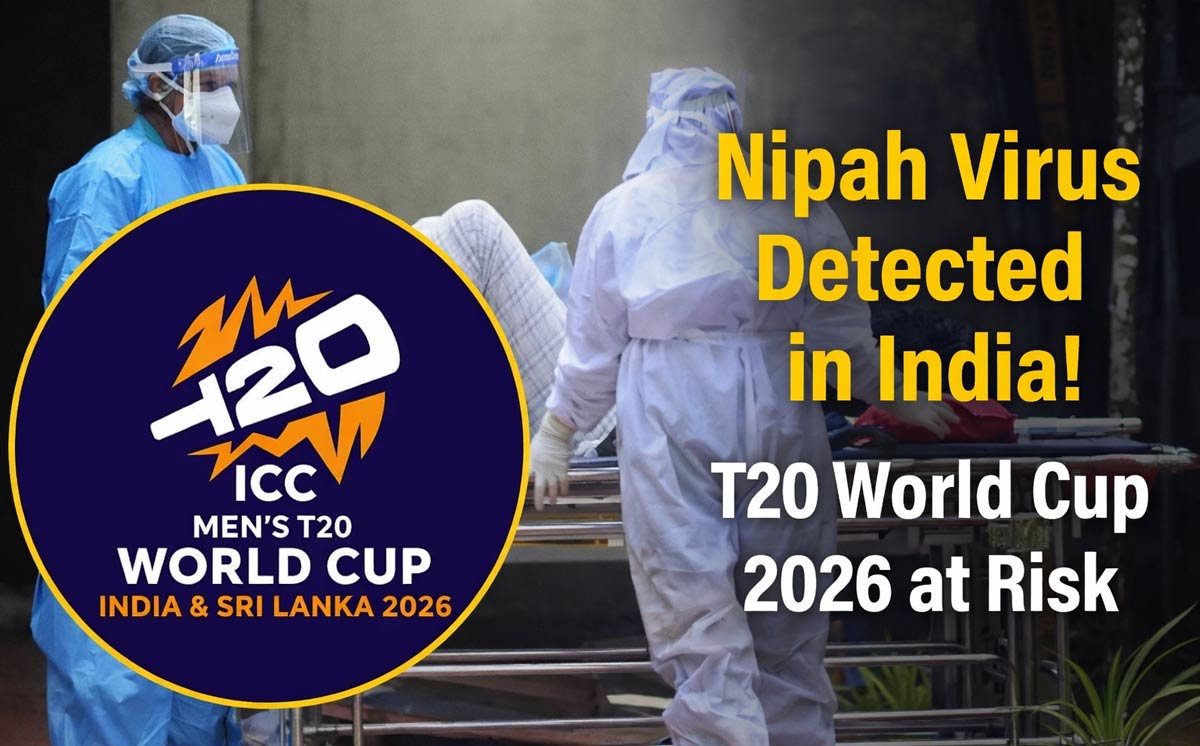
As India prepares to co-host the ICC Men's T20 World Cup starting February 7, fresh concerns over public health have ignited debates about the event's venue. With two confirmed cases of the deadly Nipah virus in West Bengal since December, several Asian nations-including Pakistan, Singapore, and Malaysia-have ramped up strict health screening measures at entry points, prompting calls for the International Cricket Council (ICC) to shift the tournament to safer alternatives.
The Nipah virus, known for its high fatality rate of up to 75% and potential for human-to-human transmission, was detected in two healthcare workers in West Bengal. Indian authorities have declared the outbreak contained, with 196 contacts traced, quarantined, and tested negative, emphasizing that no new cases have emerged. However, the virus's history in the region- including outbreaks in West Bengal in 2001 and 2007-has heightened regional vigilance. The World Health Organization classifies Nipah as a priority pathogen due to its epidemic potential, and with no vaccine or specific treatment available, experts warn of risks in densely populated events like the World Cup.
In response to the cases, Pakistan has mandated enhanced thermal screening, clinical assessments, and 21-day travel history checks for all incoming travelers at airports, seaports, and land borders. Singapore has introduced temperature screening for flights from affected Indian regions, while Malaysia is boosting health checks at international entry points, focusing on high-risk arrivals. These measures, echoed by Thailand, Hong Kong, Indonesia, and Vietnam, underscore growing unease about cross-border transmission from India. "These proactive steps by neighboring countries highlight the perceived threat, even as India insists the situation is under control," said a public health analyst in Karachi.
The T20 World Cup, scheduled from February 7 to March 8 and co-hosted by India and Sri Lanka, features 55 matches across venues like Mumbai's Wankhede Stadium, Chennai's MA Chidambaram Stadium, and Delhi's Arun Jaitley Stadium. The tournament will draw teams from 20 nations, including Pakistan, England, Australia, and Afghanistan, along with thousands of international fans. Critics argue that hosting in India could expose participants to unnecessary risks, especially given the virus's incubation period of up to 45 days and its spread via respiratory droplets or contaminated food.
Social media has amplified these concerns, with users and cricket enthusiasts urging the ICC to relocate the event. One viral post claimed the outbreak involves "5+ cases" and called for an immediate shift, citing player safety and poor management, garnering thousands of views and calls to "Shift T20 Worldcup from India." Another user suggested the tournament "might be relocated from India due to the Nipah virus affecting the entire country," while a third demanded a move to Sri Lanka to prioritize health over schedules. Even without escalation, some speculate matches could be held behind closed doors, as noted in online discussions.
While the ICC has not issued an official statement on the Nipah situation, precedents exist for venue shifts due to health crises-such as the 2021 T20 World Cup moving from India to the UAE amid COVID-19. Proponents of relocation point to countries like Pakistan, which has successfully hosted international cricket in recent years and now demonstrates robust health protocols. Singapore and Malaysia, with their advanced screening systems, could also support alternative arrangements, though infrastructure limitations might favor co-host Sri Lanka or other neutral venues.
Indian officials maintain that the two isolated cases pose no broader threat, with enhanced surveillance and protocols in place. However, with the tournament just days away, stakeholders argue the ICC must prioritize safety. "Human lives must always come before tournaments," echoed a sentiment from cricket forums. As calls mount, the governing body faces pressure to reassess and potentially shift the World Cup to mitigate risks, ensuring the spirit of the game endures without compromise to global health.


No comments yet. Be the first to comment!
.png)
Your trusted source for breaking news, in-depth analysis, and comprehensive coverage of today's most important stories.
Get daily updates on breaking news, exclusive interviews, and special features delivered to your inbox.
Have a news tip or want to get in touch with our editorial team? We're here to help.
Austin, Texas, USA