
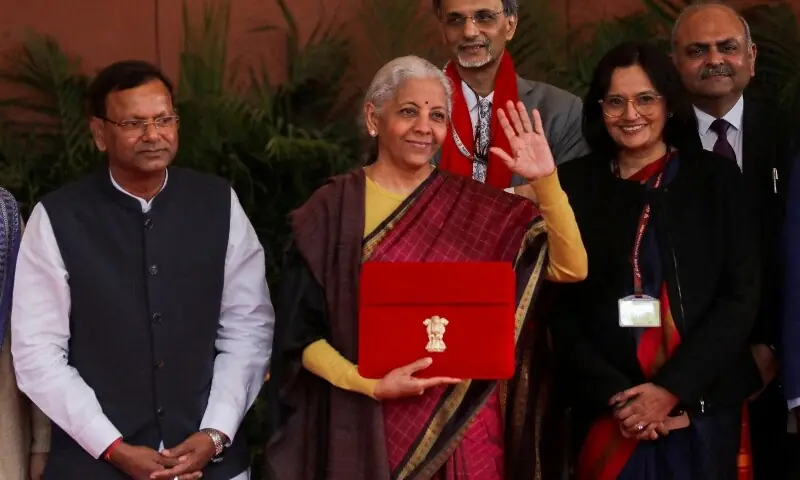
NEW DELHI: India will spend a record amount on infrastructure and defence, the finance minister said in her national budget speech on Sunday, with plans for high-speed rail, submarines and fighter jets.
New Delhi plans to spend $133 billion on infrastructure and $85 billion on defence, a respective rise of around nine and 15 percent compared to last year’s budget.
Data centres, artificial intelligence, and the mining and processing of rare earths will also receive government support, Finance Minister Nirmala Sitharaman told parliament.
She said public spending on infrastructure had increased dramatically from around $21 billion (2 trillion rupees) in 2014-15 and that it was now at an “all-time high”.
Rajnath says armed forces would be equipped with fighter jets, drones, ships, submarines and critical hardware
The defence spending hike comes after a four-day conflict with Pakistan last May that killed at least 70 people, and saw both sides make extensive use of drones as well as intense missile and artillery barrages.
‘Best interest’
Defence minister Rajnath Singh described the spending as “unprecedented” and said it would help equip India’s armed forces with fighter jets, drones, ships, submarines and other critical hardware. “It is in the best interest of the nation,” he added. New Delhi is in the midst of negotiating defence contracts with domestic and international suppliers, including France, the United States and Germany.
The world’s most populous country sees massive infrastructure spending as key to sustaining its high growth rate by boosting domestic manufacturing and creating millions of new jobs.
“India is not content with simply being the fastest-growing economy,” Prime Minister Narendra Modi said after the budget. “India wants to become the world’s third-largest economy. This year’s budget presents an ambitious roadmap to give new momentum to” domestic manufacturing and self-reliance.
Sectors including textiles, pharmaceuticals, electronics and chemicals are primary targets to boost exports, Sitharaman said.
She promised the development of business parks for textiles and chemicals and said $5 billion would be spent on boosting domestic electronics manufacturing.
Published in Dawn, February 2nd, 2026

.png)
Your trusted source for breaking news, in-depth analysis, and comprehensive coverage of today's most important stories.
Get daily updates on breaking news, exclusive interviews, and special features delivered to your inbox.
Have a news tip or want to get in touch with our editorial team? We're here to help.
Austin, Texas, USA