
On March 9, the State Bank of Pakistan (SBP) decided to keep the policy interest rate unchanged at 10.5pc, a decision that arrived as the macroeconomic outlook became “quite uncertain following the outbreak of the war in the Middle East”.
The closure of the Strait of Hormuz following the escalation compounded war-related worries for oil-import-dependent Pakistan. War-risk premiums have reportedly risen manifold since the conflict began, while obtaining insurance coverage for import cargoes has become increasingly difficult even at extremely high rates.
In response, the SBP temporarily allowed oil imports on a CIF (cost, insurance, and freight) basis for 60 days, instead of the usual C&F (cost and freight) basis — a step that ensured the timely arrival of oil cargoes but could result in faster and higher outflows of foreign exchange.
These developments came as inflation in Pakistan was already edging upward. Headline inflation rose from 5.8 per cent in January to 7pc in February, with the central bank noting that core inflation stood around 7.6 pc, signalling a return of underlying price pressures. Weekly inflation data showed the Sensitive Price Indicator (SPI) increased by 1.89pc during the week ended March 11, with year-on-year SPI registering an increase of 6.44pc.
In these trying times, market regulators must strengthen monitoring systems, enforce stock disclosure policies, and penalise hoarding practices
The impact of rising oil prices spread quickly through the economy. From March 7, the government raised petrol prices by 20.66 pc, diesel by 19.54 pc, and LPG by 12.13 pc. It also decided to review prices weekly rather than every two weeks.
Under normal circumstances, central banks respond to rising inflation by raising interest rates. Pakistan’s current economic conditions, however, leave limited room for further monetary tightening. Economic growth remains fragile, with large-scale manufacturing recording modest year-on-year growth of just 0.4pc by December 2025.
Businesses are already struggling with high borrowing costs and uncertain demand. Moreover, since the government itself is a major borrower from the banking system, higher rates would significantly raise the cost of servicing public debt and worsen fiscal pressures. Against this backdrop, the SBP appears to have opted for policy stability rather than additional tightening, despite the International Monetary Fund’s urging for a cautious, data-dependent monetary policy to anchor inflation expectations.
Prime Minister Shehbaz Sharif has also announced measures to reduce fuel consumption within the public sector to promote energy conservation. Provincial governments are following similar steps, although past austerity drives have produced mixed results, often undermined by weak enforcement and limited behavioural change within public institutions.
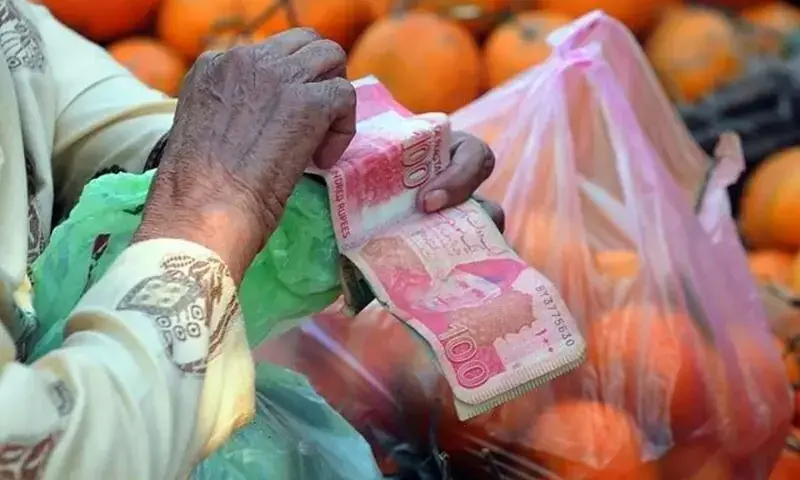
While energy costs dominate immediate concerns, the broader economic risk lies in food inflation. Rising fuel prices directly affect food supply chains by increasing transport costs, raising agricultural input costs, and elevating processing costs. For most households — particularly those millions of Pakistanis living below or at the threshold of the poverty line — food inflation has a far more immediate impact on living standards than many other price increases.
According to the World Bank’s last assessment in June 2025, approximately 44.7pc of the population — roughly 107.95 million people — was already living below the poverty line, making sustained social protection critical as inflationary preses mount.
Data from the Pakistan Bureau of Statistics highlights Pakistan’s growing exposure to food imports. During 7MFY26, the country’s food import bill reached $5.5 billion, an increase of 19.27pc compared with the same period last year. Palm oil accounted for the largest share, followed by pulses, tea, soybean oil, and sugar. Particularly striking was the surge in sugar imports, which skyrocketed by 13,494.93pc to 308,741 tonnes during July-January 2026, with the import value leaping to $174.6m from just $2.2m the previous year.
This sugar import surge illustrates how quickly domestic production shortfalls can force costly emergency purchases. Federal Minister for National Food Security Rana Tanveer Hussain informed the National Assembly that last year’s sugarcane crop was affected by climate variability, reducing sugar production to approximately 5.8m tonnes from initial projections of around 7m tonnes. To stabilise domestic prices, the government authorised the import of roughly 300,000 tonnes of sugar, procured through transparent tenders from international markets including Thailand and Brazil.
The priority in the present circumstances should be maintaining strategic food reserves. Government stocks of essential commodities act as a buffer against sudden supply disruptions.
Deputy Prime Minister Ishaq Dar was recently briefed that the federal government currently holds around 2m metric tons of wheat, which can be released to provinces according to their needs. Officials have assured the parliament that strategic wheat reserves will be maintained through provincial procurement and fresh supplies from the 2025-26 wheat crop.
The federal and provincial governments must protect vulnerable households from sudden price shocks. Programmes such as the Benazir Income Support Programme (BISP) provide financial assistance to low-income households, helping them maintain food consumption when prices rise sharply. Recent discussions between the National Assembly Standing Committee on Defence and BISP leadership have focused on strengthening social protection initiatives and expanding support for deserving families across the country.
The government has already warned of strict action against anyone attempting to hoard fuel or manipulate supplies for profiteering, but the warning now needs to be translated into concrete actions.
Published in Dawn, The Business and Finance Weekly, March 16th, 2026

No comments yet. Be the first to comment!